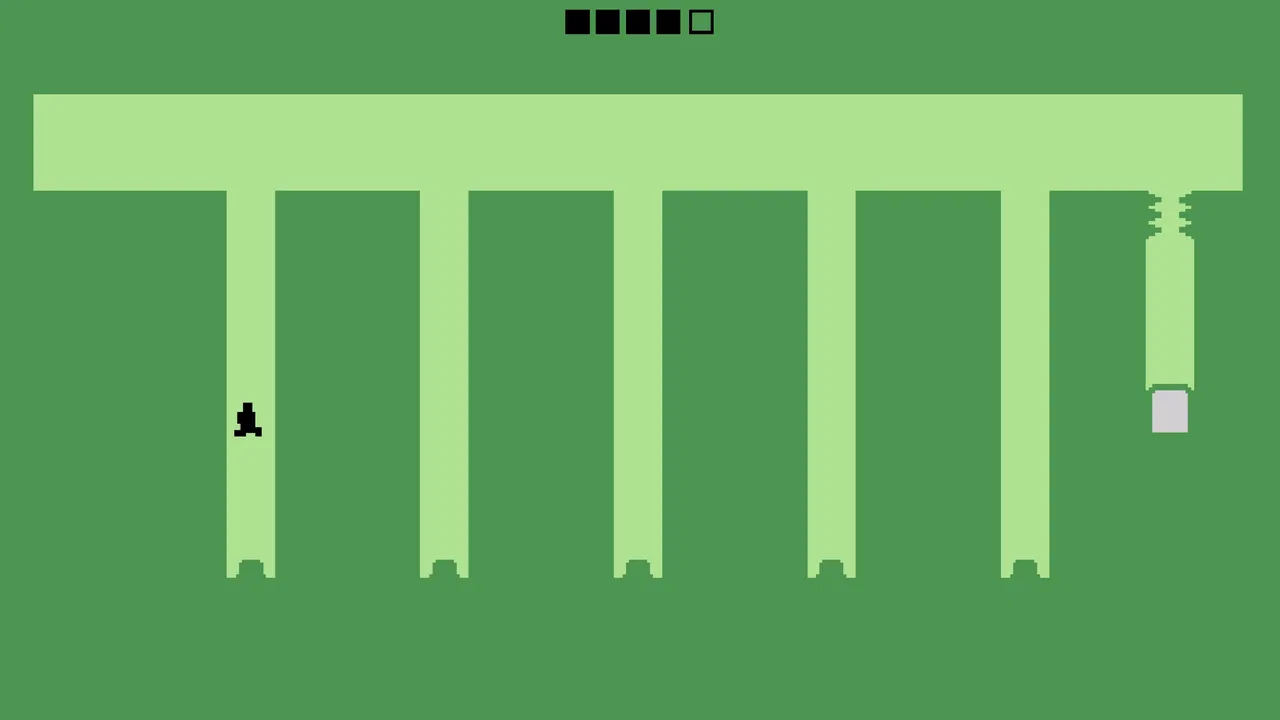
Level Devil - NOT A Troll Game
- 4.8
- Rating
- 50.00M
- Installs
- Free
- Price

 Analysis by App-foxy
I went into Level Devil - NOT A Troll Game expecting a straightforward action game, but its real appeal is the way it makes ordinary-looking platforming feel suspicious. The screen may appear simple, yet progress depends on noticing that familiar assumptions are unsafe. A jump that seems routine can demand patience, and a path that looks obvious may reward a slower, more observant approach. That single idea gives the game its identity.
Developed by Poki, this free action game is aimed at Everyone and runs on Android devices using at least Android 6.0. It has reached over 10 million installs, with an average rating of 4.2 from around 81 thousand ratings, so it clearly connects with a large audience. I can understand why: it is easy to start, quick to retry, and built around the satisfying moment when I finally understand what a level was trying to trick me into doing.
Why the game’s central idea works
The most important capability here is not a complex control system or a deep character build. It is the game’s ability to turn expectation into the main obstacle. In a conventional platformer, I usually read the level, identify the safe route, and execute a jump. Here, reading the level is only the first step. I also have to question whether the visible route is genuinely safe.
You May Also Like

 Blood Strike: 2.5 Anniversary
Blood Strike’s Loadouts Turn Every Drop Into a Tactical Gamble
A close look at Blood Strike’s custom loadouts: how fast access to signature weapons reshapes its battle royale rhythm, rewards preparation, and narrows the gap between fights.

 Pandora - Music & Podcasts
Pandora’s Music Is Easy to Start, but Harder to Recover
Pandora’s strength is its low-effort path from a seed to a station. Its weak spot is how much confidence it asks you to place in connection, setup, and quiet recovery.

 8 Ball Pool
 Is Built on Rivalries, Rematches, and Routine
A close look at the rivalries, rematches, shared routines, and unanswered safety questions that turn a quick pool match into a persistent mobile community.

 Samsung Music
’s Quiet Strength Is Playing What You Already Own
Its reach comes less from spectacle than from dependable access to a personal library. That simplicity is both the app’s strongest retention engine and its ceiling.

 AccuWeather: Weather Radar
AccuWeather Review: A Quick, Clear Forecast for Everyday Decisions
For everyday plans, the best forecast is the one you can understand quickly. AccuWeather makes rain timing, radar, and local conditions easy to act on, with a few trade-offs.

 Hill Climb Racing
Why Hill Climb Racing Still Turns Crashes Into One More Run
A tiny car, a bumpy hill and one more upgrade: Hill Climb Racing keeps resurfacing because its simple chaos makes every near-miss feel personal.
More From Our News Desk
View All News


That changes the rhythm of play. Instead of holding a button and moving on instinct, I pay attention to the arrangement of platforms, gaps, and hazards. The challenge comes from learning the game’s language: when to move, when to wait, and when an apparently harmless decision deserves suspicion. The best part is the shift from reflex-only play to reflexes guided by observation.
This makes the experience feel different from a typical endless runner or a traditional platform game. Those alternatives often focus on speed, collecting items, or steadily mastering a predictable obstacle pattern. Level Devil is more interested in the moment when my first interpretation turns out to be wrong. That can be funny, frustrating, and rewarding in quick succession.
The store summary calls it “Just a nice, normal game,” while the short description identifies it as Level Devil. I would not take the first phrase literally. The game’s personality comes from refusing to behave as normally as its simple presentation suggests. It uses that contrast to keep me alert without requiring a large amount of explanation before play begins.
What I actually do while playing
In practice, I approach each section as a small experiment. I look at the available space, make a move, and then use the result to adjust my next attempt. When I fail, the useful question is not simply “Was I too slow?” It is “What did the level expect me to assume?” That mindset makes repeated attempts more meaningful than blindly trying the same action again.
This is also why the game can be more demanding than its basic appearance suggests. The controls may be approachable, but approachable controls do not guarantee easy progress. The difficulty comes from interpreting situations correctly under pressure. A player who reacts quickly but never studies mistakes may struggle more than someone with slower reflexes who notices patterns.
I found it helpful to separate movement into two phases. First, I inspect the layout and decide what looks deliberately inviting. Then I commit to a movement rather than constantly changing direction in panic. This small habit reduces wasted attempts and makes the game feel less random. Even when a surprise catches me, I have a clearer idea of what to test next.
Another useful approach is to treat early attempts as reconnaissance. I do not expect every first try to succeed. Instead, I use it to discover the timing and identify which visual details deserve attention. That is a better fit for this game than demanding immediate perfection. It also keeps the experience from becoming a pure test of patience.
The game’s compact action format suits short sessions. I can play when I have a few spare minutes, stop after a difficult attempt, and return later without needing to remember a complicated story or inventory. That simplicity is a strength for casual players, although people who want a long narrative campaign or extensive customization may find the format too narrow.
A realistic everyday use case
For me, the most natural scenario is a short break during a commute or between tasks. I can open the game, focus on a small challenge, and make several attempts without committing to a long play session. The immediate restart-and-learn cycle works well when I want active entertainment rather than passive scrolling.
It also fits the kind of evening when I want something light but not mindless. I might begin with the expectation of playing briefly, then continue because one failed attempt has revealed a new possibility. The important distinction is that the game gives me a clear reason to try again: I am not merely waiting for a random favorable result; I am testing a better understanding of the level.
That said, I would avoid opening it when I am already irritated or looking for a relaxing game. The same surprises that make it memorable can feel aggravating when I do not have the patience to learn from failure. A calm, curious mood improves the experience considerably.
Where it differs from familiar action games
Compared with an endless runner, this game asks for more deliberate thought and less continuous momentum. An endless runner is usually about surviving as long as possible while reacting to a stream of obstacles. Here, the focus is narrower: understand the immediate situation, make a precise attempt, and use failure as information.
Compared with a conventional platformer, it places more weight on distrust and discovery than on a steadily learned route. In a standard level, visual clarity usually helps me plan. In this game, visual clarity can be part of the misdirection. That does not make the controls complicated, but it does make the player’s interpretation less reliable.
It is also different from a large action game with upgrades, equipment, or a broad map. There is no need to manage a character build or spend time preparing for a mission. The trade is straightforward: I get a focused challenge instead of a deep progression system. If I want immediate problem-solving, that is a good exchange. If I want long-term customization, another genre will serve me better.
The practical tradeoffs before installing
The free entry point is a clear advantage. I can try the game without paying upfront, and the age rating of Everyone makes it approachable for a broad audience. The current version is 1.0.0, and optional in-app purchases are listed at $1.99 per item. I would still treat the purchase option as secondary to the core decision: whether I enjoy repeated attempts built around surprise and correction.
The biggest limitation is emotional rather than technical. The game deliberately undermines confidence. A player who dislikes being caught by unexpected changes may see the design as unfair, even when the intended challenge is to learn from that surprise. I think the experience works best when I accept that confusion is part of the structure instead of expecting every obstacle to be announced clearly.
Another tradeoff is depth. The central idea is strong, but it is also specific. Once I know exactly what kind of experience I am getting, the appeal depends on how much I enjoy applying that idea repeatedly. Someone seeking varied combat, exploration, or a substantial story should not choose this as a replacement for a larger action title.
There is also a difference between difficulty that rewards precision and difficulty that rewards interpretation. Players who enjoy memorizing patterns and refining timing will likely appreciate the loop. Players who prefer improvisational combat may find the game restrictive because the meaningful progress comes from understanding the level rather than overpowering an enemy.
My practical tip is to play with sound judgment rather than speed. Move only when you have a reason, and after a failure, change one assumption at a time. If I alter everything at once, I cannot tell what solved the problem. This controlled approach makes the game feel more like a conversation with the level than a series of random punishments.
Who gets the most from this design
I would recommend it to players who enjoy compact action challenges, quick retries, and games that make them question what they see. It is especially suitable for people who like discovering a trick, testing a theory, and feeling a small burst of satisfaction when a previously confusing section becomes readable.
It is also a good fit for families looking for an accessible game concept without a complicated setup. The Everyone rating supports that broad accessibility, although younger players may still need patience with the repeated-failure structure. The controls can be easy to understand while the decisions remain demanding, and that distinction is worth explaining before handing it to someone who expects a very gentle experience.
I would be more cautious about recommending it to someone who wants a peaceful platformer, a competitive multiplayer match, or a story-led adventure. It is not the right choice if the main goal is to relax through predictable movement. I would also suggest skipping it if unexpected setbacks quickly make a game feel unfair. A conventional platformer with clearer level communication would probably be a better match.
The large install base and solid 4.2 average suggest that the concept has broad appeal, but popularity does not remove the need to choose the right mood. I enjoy it most when I have enough attention to notice details and enough patience to accept that my first plan may be deliberately misleading.
My recommendation after using it
Level Devil succeeds because it builds its entire experience around one clear capability: making me reconsider an apparently normal platforming situation. That focus gives every attempt a purpose. I am not just trying to move farther; I am trying to understand the rules of the moment and recognize when my instincts are leading me into trouble.
It is free to try, lightweight in concept, and suitable for short sessions, but it is not universally relaxing or endlessly varied. Its strongest audience is made up of players who enjoy surprise, experimentation, and the satisfaction of turning a failed attempt into useful knowledge. For them, the game offers a distinctive alternative to ordinary action titles.
My final advice is simple: give it a chance when you want a quick challenge, but approach it with curiosity rather than impatience. This is an action game for players who enjoy being outsmarted briefly, then learning how to outsmart the level in return. That exchange is what makes the experience worth keeping installed, even if it is not the game I would choose for every mood.
FAQs for Level Devil - NOT A Troll Game
01What is the main objective of Level Devil - NOT A Troll Game?
Level Devil is designed to challenge your problem-solving skills with a series of intricate puzzles and levels. Unlike traditional games, it promises not to troll or deceive players with misleading clues or traps. The goal is to solve each level using logic and creativity, making it ideal for puzzle enthusiasts.
02Is Level Devil suitable for children?
Level Devil is suitable for a wide range of ages, including children. However, the complexity of some puzzles might require adult assistance for younger players. The game focuses on logical reasoning, so it can be a great educational tool to enhance problem-solving skills in a fun and engaging way.
03Does Level Devil require an internet connection to play?
Level Devil is designed to be played offline, making it a convenient choice for on-the-go gaming. While some features or updates might require an internet connection, the core gameplay experience is accessible without one. This ensures players can enjoy the game anytime, anywhere.
04Are there any in-app purchases in Level Devil?
Yes, Level Devil offers in-app purchases that provide players with additional hints or solutions if they find themselves stuck on a particular level. These purchases are optional and not necessary to complete the game, ensuring a fair experience for all players without mandatory spending.
05How frequently does Level Devil receive updates?
The developers of Level Devil are committed to enhancing the gaming experience by regularly updating the app with new levels, features, and improvements. While updates do not follow a strict schedule, players can expect fresh content and bug fixes to be rolled out periodically, ensuring the game remains engaging and enjoyable.
Pros
- Unique level design keeps gameplay fresh.
- Graphics are vibrant and engaging.
- Challenging puzzles enhance critical thinking.
- Frequent updates with new content.
- Minimal ads ensure smooth play experience.
Cons
- Some levels can be overly frustrating.
- In-app purchases can be pricey.
- Occasional bugs disrupt gameplay.
- Requires internet for certain features.
- Limited customization options for avatars.

Level Devil - NOT A Troll Game
Gallery